
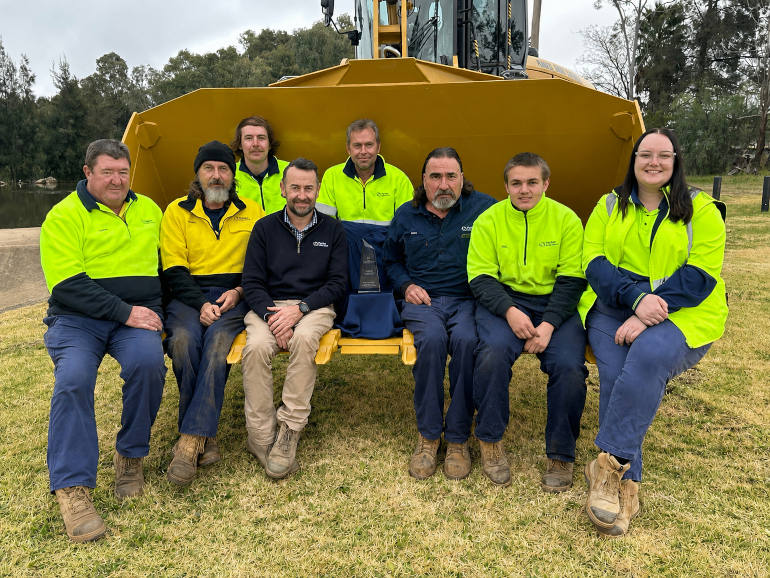
How Parkes Shire Council turned fleet data into better rural services
Parkes Shire Council manages a diverse fleet across approximately 5,000 square kilometres, supporting roadworks, parks, waste services, water and sewer operations, and other essential community activities.
With assets ranging from handheld equipment to graders, heavy trucks and plant trailers, the council’s fleet team must keep equipment safe, available and cost-effective across a large regional area.
Through detailed lifecycle planning, in-house maintenance, customised dashboards and practical use of telematics, Parkes Shire Council has created a fleet operation built around evidence, accountability and continuous improvement.
Why vote for Parkes Shire Council?
Parkes Shire Council has shown that a regional fleet can combine disciplined governance with practical innovation.
Its team understands the realities of operating across a large rural area, where service support, equipment availability and travel time can matter as much as purchase price.
Detailed lifecycle analysis, customised dashboards and structured workshop planning are improving the way assets are purchased, maintained and replaced. Telematics is being used to reduce idling, improve driver behaviour, verify community work and even identify potholes.
The council is also investing in specialist technical skills, asset protection and a carefully planned transition to lower-emission vehicles.
Fleet snapshot
- Approximately 550 major fleet assets
- Fleet value of around $18 million
- Approximately 5,000 square kilometres of operating area
- Main workshop and depot in Parkes
- Additional depots at Trundle and Peak Hill
- Council-owned fleet with maintenance completed in-house
- Rolling 10-year replacement program
- Target of 96 per cent fleet availability
- Around 150 assets monitored through telematics
- Fleet ranging from handheld equipment to graders, trucks and specialist plant
Managing a rural fleet where distance matters
Fleet management in a regional council presents challenges that are different from those faced by metropolitan organisations.
Parkes Shire Council’s assets may travel up to 150 kilometres from the main depot to support works across the shire. A breakdown in a remote location can result in lost productivity, additional travel and delays to community services.
Local service support is therefore an important part of every purchasing decision.
The lowest-priced machine is not necessarily the best-value option if specialist technicians must travel from Sydney whenever a fault occurs. Parkes considers service availability, warranty support, lead times, resale value and whole-of-life costs alongside the initial purchase price.
In one example discussed during the finalist interview, a previous machine required technicians to travel from Sydney at a cost of approximately $1,500 for each visit. An alternative supplier had a technician based locally who could meet with the fleet team regularly, review upcoming work and help resolve technical issues without the same travel costs.
This practical understanding of regional operations shapes the way Parkes specifies, buys and manages its fleet.
Decisions based on the asset life cycle
Parkes Shire Council manages its fleet through an asset management plan that includes a rolling 10-year replacement program.
Replacement decisions consider:
- Asset age
- Kilometres or operating hours
- Condition
- Maintenance history
- Utilisation
- Industry trends
- Operational requirements
- Internal recoveries
- Resale value
- Whole-of-life cost
The program is not treated as a fixed list of replacement dates. Assets can be brought forward or deferred when operating data shows that circumstances have changed.
The council also compares ownership with external hire. If an asset is not being used enough to justify its costs, the fleet team can recommend redeployment, disposal or a different method of providing the service.
Major decisions are documented and presented through the council’s plant procurement committee, which includes councillors and the mayor. This creates greater transparency and ensures substantial purchases are supported by evidence rather than preference.
Knowing what every kilometre costs
One of the defining features of Parkes Shire Council’s approach is the level of detail in its cost reporting.
The fleet team uses TechnologyOne dashboards to examine the full cost of operating an asset. For trucks, this can include calculating the cost per kilometre so different makes and models can be compared using actual fleet experience.
Fuel use, maintenance, purchase cost, resale performance and internal recoveries all contribute to the calculation.
This allows the council to compare vehicles on the basis of the complete operating result rather than fuel consumption or purchase price alone.
The same information helps respond to replacement requests.
When an operator asks for a new machine, the fleet team can examine its recovery and utilisation history. If the asset has not generated the expected level of use or internal revenue, the data may support extending its replacement date.
The council’s recovery dashboard uses a traffic-light system to make performance immediately visible. Green identifies assets performing above their expected recovery position, orange highlights assets close to target and red draws attention to assets that require investigation.
The team can then determine whether the asset is underused, incorrectly charged, priced too low or no longer required.
Turning audits into operational improvements
Parkes Shire Council views external reviews as an opportunity to improve its systems.
One audit identified the need for a stronger process when a major repair was required shortly before an asset was scheduled for replacement.
The fleet team developed a form for reactive maintenance exceeding $10,000 when the asset was due for replacement within 12 months.
The assessment records the asset, the proposed repair, its current condition, market valuation and expected resale outcome. This allows the council to determine whether completing the repair will produce a financial benefit.
The process was applied when a grader required approximately $17,000 in brake repairs.
The council obtained valuations for the machine in its damaged condition and after repair. Following the work, the grader sold for approximately $15,000 more than its estimated repaired value.
The fleet team calculated that completing the repair produced a turnaround of around $30,000 compared with selling the asset with the fault unresolved.
This example demonstrates how governance can support commercial decision-making rather than simply add another layer of administration.
A workshop planned before the vehicle arrives
Parkes Shire Council owns its fleet and completes maintenance through its in-house workshop.
Service schedules are created for individual asset types rather than applying one interval across the entire fleet. Some servicing is date-based, while other work is triggered by kilometres or operating hours.
Heavy vehicles may receive inspections every three months, while specialist plant includes service requirements and test points specific to the machine.
Maintenance planning begins before an asset enters service. Risk assessments, special servicing requirements and technical information are requested during procurement and attached to the asset record.
Work orders are generated approximately one month in advance. This allows the team to plan downtime around operating schedules, rostered days off, weather and expected workloads.
Parts are ordered ahead of time and placed into tubs marked with the relevant work order and scheduled week.
A visual workshop board shows the jobs planned for each day. Different colours identify council work, contractor work, urgent priorities and jobs that must be completed in the field.
This combination of digital planning and clear visual management makes the workshop schedule understandable at a glance.
It also helps the team detect work orders that have not been activated or completed within the expected timeframe.
Digital records from the workshop floor
Technicians use tablets to access work orders and complete servicing electronically.
Each work order can include safety instructions, isolation procedures and asset-specific test points. Technicians can add photographs, comments and follow-up work while completing the job.
Time and date stamps provide an auditable record of when each task was performed.
When additional work is identified, it can be scheduled directly from the service record rather than relying on a handwritten note or someone remembering to raise another job later.
The council believes this structured scheduling is reducing reactive maintenance because work is being completed when it is due and emerging faults are being identified earlier.
It also improves confidence in the maintenance record. The system does not simply show that a service was completed; it records the checks performed, the technician involved and the evidence attached.
Four sources of operational evidence
Parkes combines several data sources to build a more reliable view of fleet activity:
- Fuel cards
- Internal fuel fobs
- GPS and telematics
- Electronic pre-start inspections
The team uses this information to check whether assets are moving, being charged correctly and operating in the expected locations.
Council yards and operating areas are geofenced, while council mapping information has been integrated with the telematics platform.
Machine hours are used wherever possible rather than relying solely on timesheets. This provides a more accurate picture of how long plant has actually been working.
Auxiliary inputs are also used to distinguish between travelling and productive operation.
For example, the council can identify when a mower’s blades are engaged, when a street sweeper’s broom is operating or when another attachment is in use.
This allows the organisation to report not only that a vehicle travelled through an area, but that it performed the intended work.
The information supports service verification and provides the community with clearer evidence of activities such as mowing and street sweeping.
Reducing idling before replacing everything
Parkes Shire Council is progressing its transition to lower-emission vehicles, but its sustainability approach is not based solely on buying electric vehicles.
The council monitors fuel type and operating patterns across approximately 150 connected assets. This data is being used to develop future replacement business cases for electric, hybrid and conventional vehicles.
Its first electric passenger vehicle, a Kia EV5, was introduced as a pool car so a wider group of employees could experience the technology.
A specific user guide explains how to book, operate and charge the vehicle.
At the same time, the council is working to reduce fuel use across the existing fleet.
Telematics showed approximately 750 hours of idling each week across the monitored assets. Through reporting and discussions with operational teams, this was reduced to about 500 hours.
Using the council’s average estimate of four litres of fuel consumed for every hour of idling, the reduction represents approximately 1,000 litres of fuel each week. At an assumed cost of $2.20 per litre, that equates to around $2,200 in weekly fuel savings.
Reducing idle time also limits unnecessary engine hours, supporting lower maintenance costs and potentially stronger resale values for plant.
The council is increasingly purchasing machines with automatic engine-stop functions so engines switch off when the equipment is parked and the handbrake is applied.
Using fleet vehicles to find potholes
One of Parkes Shire Council’s most innovative projects uses telematics to help identify road defects.
Rather than installing artificial intelligence cameras, the system uses movement data from the GPS unit to detect sharp G-force events that may indicate a vehicle has struck a pothole.
With approximately 150 connected vehicles regularly travelling across the shire, the fleet effectively becomes a mobile road-inspection network.
The system maps the strongest events and produces a list of potential problem locations. Council officers can then inspect the sites and determine whether a pothole, railway crossing or damaged road section requires attention.
This allows the council to use vehicles already travelling through the network to supplement the work of its dedicated asset inspectors.
It is a practical example of fleet technology creating value outside the fleet department.
Turning safety information into action
Telematics also supports driver safety.
Parkes monitors speeding, harsh braking, harsh acceleration and out-of-hours vehicle use. Driver scorecards are distributed automatically to managers each Monday.
The council initially addresses concerns through conversation and coaching. Where behaviour continues, a staged positive-behaviour process can be applied.
In one example, an employee generated approximately 750 weekly seatbelt-related events. After the issue was discussed, the result reportedly fell to around 15 events.
The fleet team says publishing performance information often produces an immediate improvement before formal action is required.
Vehicle systems can also reveal operating risks that may not appear in a normal incident report.
Data from electronic braking systems on trailers can identify ABS activations, wheel lift and other events. This provides an opportunity to discuss driving technique or organise additional training before a more serious event occurs.
Near-miss reports are also used to redesign work environments. Parkes has reviewed vehicle movements through its depot and is changing traffic flow to remove a pinch point. Reverse-in parking is also being considered to reduce the risks created when multiple vehicles reverse out at the beginning of the working day.
Developing specialist capability in-house
Parkes has invested in technical skills that are not commonly available within council workshops.
Its technicians received training and diagnostic capability to work on electronic braking systems for heavy trailers.
This allowed the council to retrofit an electronic braking system to an existing tri-axle plant trailer rather than waiting until the trailer was replaced.
The upgraded system improves braking performance and provides operating data that can be reviewed by the fleet team.
The project reflects the council’s willingness to improve an existing asset when there is a clear safety benefit instead of relying only on replacement programs.
Protecting the investment
The council has also invested in protecting its approximately $18 million fleet from the regional environment.
New shelters and hardstand areas have been constructed to keep assets out of the sun and weather when they are not in use.
The work was completed using council resources.
Protecting equipment can improve presentation, reduce deterioration and support stronger resale outcomes. It also reflects the sense of ownership the fleet team brings to managing public assets.
Results that matter
Parkes Shire Council’s approach has produced practical improvements across the fleet:
- Fleet availability is managed against a target of 96 per cent
- Cost and recovery dashboards support replacement decisions
- Operating costs can be assessed by kilometre or machine hour
- Major repair decisions are supported by documented financial analysis
- Maintenance is planned a month ahead
- Digital work orders provide photographs, timestamps and test results
- Reactive maintenance expenditure has reduced
- Idling has fallen by approximately 250 hours a week across monitored assets
- Telematics data is supporting road-condition monitoring
- Driver scorecards are encouraging safer behaviour
- Electronic braking technology has been retrofitted to existing equipment
- Asset shelters are protecting the council’s fleet investment
Continuous improvement without waiting for perfection
Parkes Shire Council does not claim that every innovation will work immediately.
Its approach is to test new ideas, review the results and change direction when necessary.
Fleet and Depot Manager Michael O’Shannessy explained the philosophy during the finalist interview:
“We don’t sit on our hands. We try things. If it doesn’t work, we change tack and go again.”
The fleet team also shares its systems and experience with other councils. Its work with TechnologyOne, telematics and maintenance processes has attracted interest from organisations in Australia and overseas.
For Parkes, leadership does not mean keeping its best ideas private. It means helping the wider local government fleet community improve.
Vote for Parkes Shire Council in the 2026 Fleet News Group Fleet of the Year Award and recognise a fleet team that measures its performance, acts on the evidence and continually looks for a better way to serve its community.